Agile vs Waterfall: What Every Project Manager Must Know
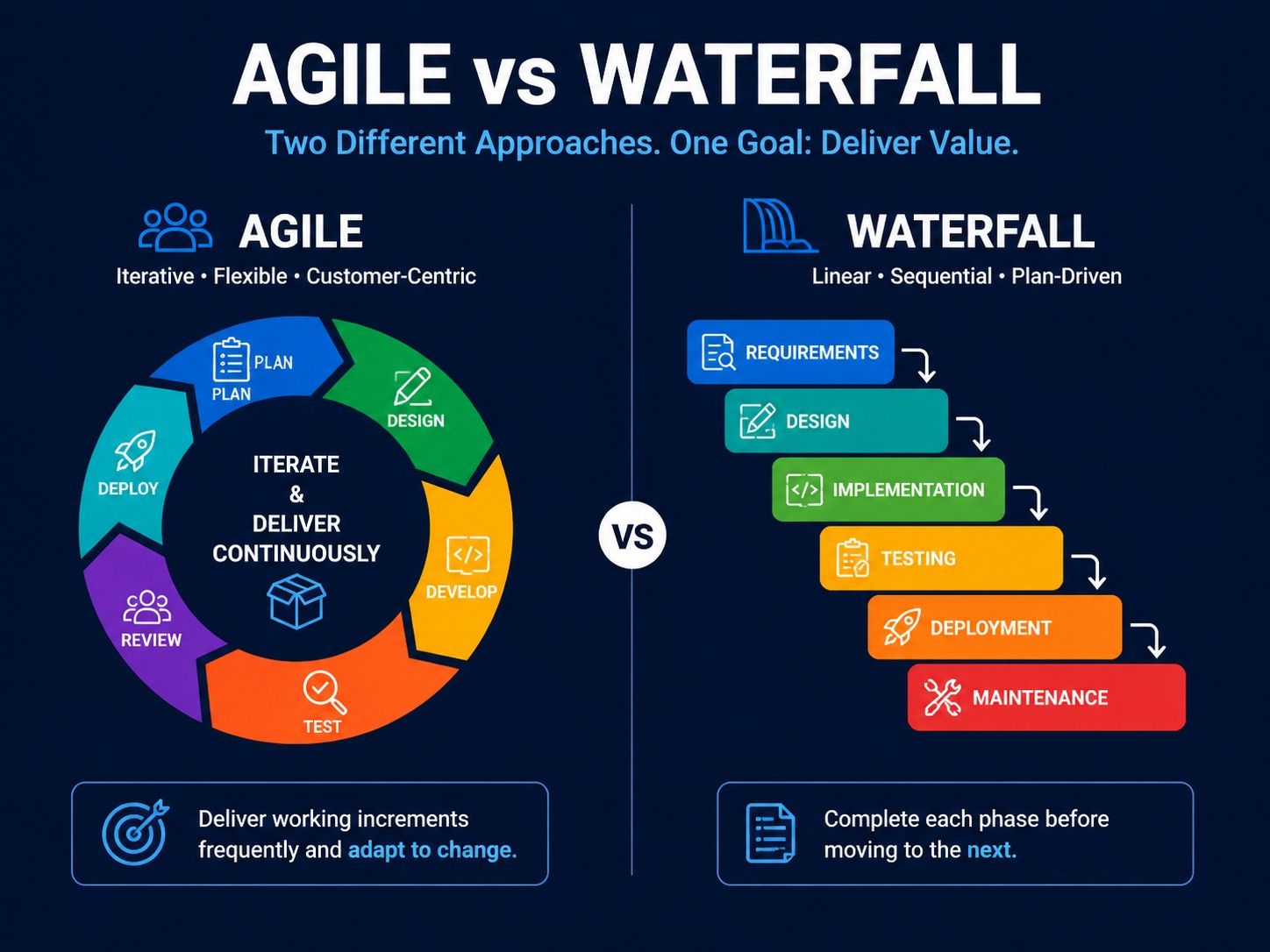
Choosing the right project management approach can make or break your project. Two of the most widely used methodologies, Agile and Waterfall, offer very different ways of planning, executing, and delivering work. If you’re preparing for certifications like Project Management Professional (PMP) or working toward Agile credentials such as PMI Agile Certified Practitioner (PMI-ACP), understanding the difference is essential.
In this guide, we break down Agile vs Waterfall in simple, practical terms so you can choose the right approach, and succeed in your projects.
What Is Waterfall Methodology?
Waterfall is a traditional, linear project management approach where each phase must be completed before the next begins.
Key Characteristics:
- Sequential phases (Requirements → Design → Development → Testing → Deployment)
- Clear documentation and upfront planning
- Changes are difficult once the project starts
- Best suited for predictable, stable projects
When to Use Waterfall:
- Construction or engineering projects
- Government or regulated environments
- Projects with fixed scope and requirements
- Projects with minimal risks and uncertainties
What Is Agile Methodology?
Agile is a flexible, iterative approach that focuses on continuous improvement, customer feedback, and rapid delivery.
Key Characteristics:
- Work is divided into short cycles (sprints)
- Frequent feedback and adaptation
- Emphasis on collaboration and customer value
- Welcomes change, even late in development
Popular Agile Frameworks:
- Scrum
- Kanban
When to Use Agile:
- Software development and tech projects
- Projects with evolving requirements
- Innovation-driven environments
Advantages and Disadvantages
Agile Pros:
- Faster delivery of value
- High customer satisfaction
- Flexibility to adapt to change
Agile Cons:
- Less predictability
- Requires strong team collaboration
- Scope can expand (scope creep)
Waterfall Pros:
- Clear structure and documentation
- Easy to manage and track
- Well-defined scope
Waterfall Cons:
- Inflexible to changes
- Late testing can increase risks
- Customer feedback comes too late
Which One Should You Choose?
The truth is, there is no one-size-fits-all answer.
- Choose Waterfall when requirements are clear and unlikely to change.
- Choose Agile when flexibility, speed, and customer feedback are critical.
Many modern organizations now use a Hybrid approach, combining the structure of Waterfall with the adaptability of Agile.
Why This Matters for Project Managers
As a project manager, mastering both methodologies gives you a competitive edge. Today’s job market values professionals who can adapt their approach based on project needs.
If you’re pursuing certifications like Project Management Professional (PMP) or PMI Agile Certified Practitioner (PMI-ACP), you’ll be tested on both Agile and predictive (Waterfall) concepts, so understanding this comparison is critical for exam success.
Final Thoughts
Both Agile and Waterfall have their place in project management. The best project managers are not tied to one methodology, they are flexible, strategic, and results-driven.
By understanding when and how to apply each approach, you position yourself to deliver successful projects, every time.
Ready to Master Project Management?
At PEMARC, we help professionals like you pass certification exams and advance your career in just 4–8 weeks. Start your journey today and become a globally recognized project management professional.