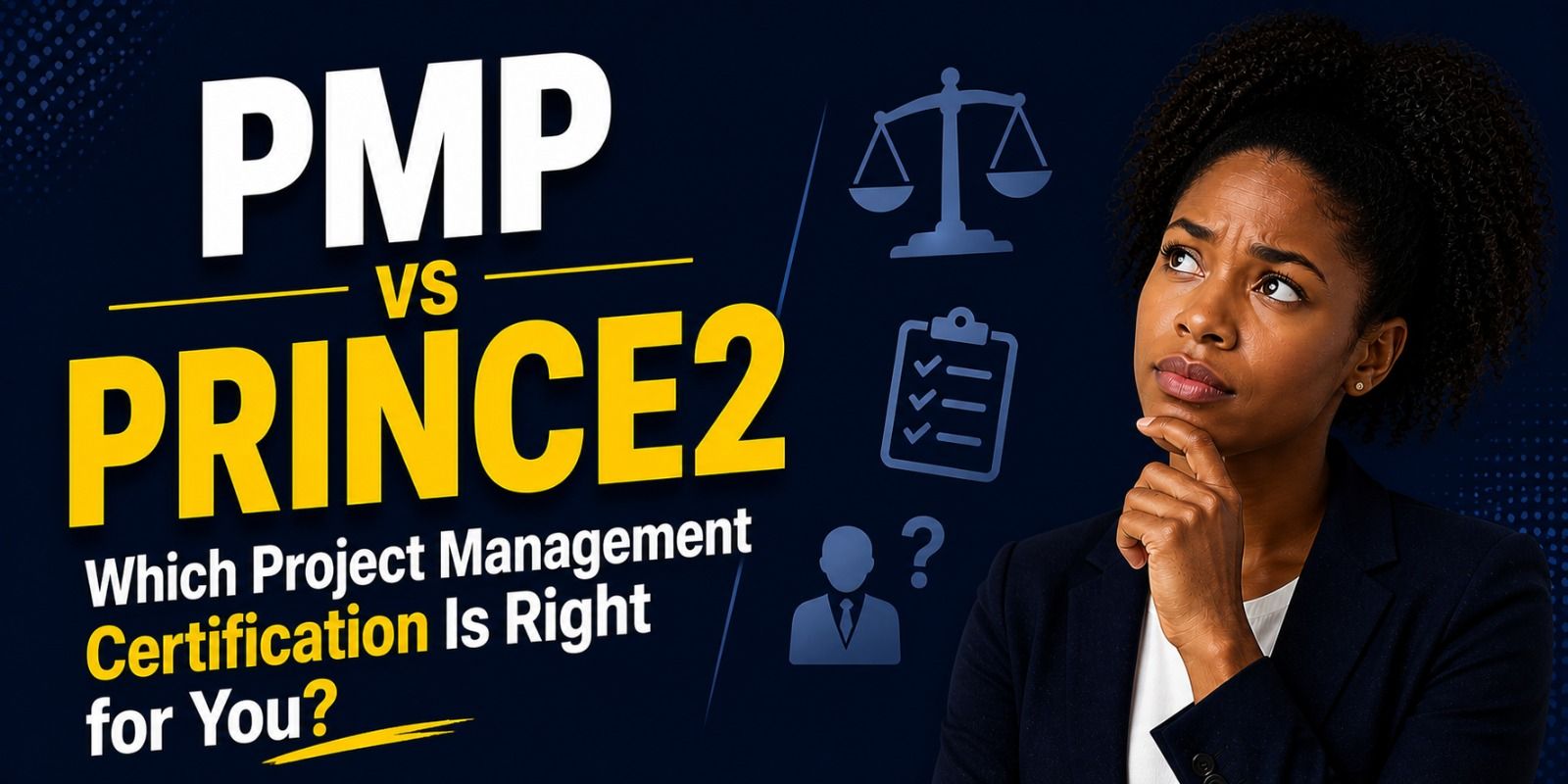
PMP vs PRINCE2: Which Project Management Certification Is Right for You?
If you're serious about advancing your project management career, you've likely come across two globally recognized certifications: PMP (Project Management Professional) and PRINCE2 (Projects IN Controlled Environments). Both are highly respected—but they serve different purposes and suit different career paths.
This guide breaks down the key differences to help you choose the right certification for your goals, especially if you're in Kenya or the wider African market.
What Is PMP?
PMP (Project Management Professional) is a globally recognized certification offered by the Project Management Institute (PMI), a USA based organization. It validates that you have the skills, experience, and knowledge to lead and manage projects successfully.
Key Highlights:
- Emphasizes practical experience and decision-making
- Covers People, Process, and Business Environment
- Recognized across industries worldwide
- Requires prior project management experience
What Is PRINCE2?
PRINCE2 is a process-based project management methodology originally developed by the UK government and now managed by AXELOS.
Key Highlights:
- Structured around principles, themes, and processes
- Focuses on clear roles, documentation, and governance
- Widely used in the UK, Europe, and government projects
- No strict experience requirement for Foundation level
PMP vs PRINCE2: Key Difference
1. Approach
- PMP: Focuses on what a project manager should know and do
- PRINCE2: Focuses on how projects should be structured and managed
2. Certification Structure
- PMP: Single, comprehensive certification exam
- PRINCE2: Two levels — Foundation and Practitioner
3. Eligibility Requirements
- PMP: Requires education + project experience + training hours
- PRINCE2:
- Foundation: No experience required
- Practitioner: Requires Foundation certification
4. Global Recognition
- PMP: Highly recognized in USA, Canada, Middle East, Africa, and globally
- PRINCE2: Popular in UK, Europe, and government sectors
5. Exam Style
- PMP: Scenario-based, tests application and critical thinking
- PRINCE2: Knowledge-based and scenario questions focused on methodology understanding
6. Flexibility
- PMP: Covers predictive, agile, and hybrid approaches
- PRINCE2: More structured and process-driven, though PRINCE2 Agile exists
Similarities Between PMP and PRINCE2
Despite differences, both certifications share key strengths:
- Globally respected in project management
- Improve career prospects and earning potential
- Provide structured knowledge to manage projects successfully
- Applicable across multiple industries
Which One Should You Choose?
The right choice depends on your situation:
Choose PMP if you:
- Have project experience
- Want a globally flexible certification
- Prefer a practical, real-world approach
Choose PRINCE2 if you:
- Prefer a structured methodology
- Work in or target UK/EU or government projects
- Are starting with no prior experience
Can You Do Both?
Yes, and many professionals do.
Combining PMP and PRINCE2 gives you:
- Strategic thinking (PMP) + structured execution (PRINCE2)
- A stronger profile for international opportunities
Final Thoughts
There’s no “better” certification—only what fits your career path.
- PMP equips you with skills and adaptability
- PRINCE2 provides structure and governance
Choosing wisely means aligning the certification with your industry, location, and career goals.